
 Ingles



The perfect fit is not about tightening more
A well-adjusted cap should stay stable without compressing your head. It should sit naturally, keep your ears comfortable, and hold its position without making you reposition it constantly.
To find your fit —how the cap adjusts and sits on your head— four factors are worth checking: circumference, depth, position, and rear closure.
How should a cap sit?
The goal is not to wear it as tight as possible, but to find a point where contact is even and comfortable.
The cap should stay in place when you walk or move your head, without localized pressure on your forehead or temples, pinching your ears, or needing excessive tightening to stay stable.
Stable does not mean tight.
A good cap stays in place because it fits correctly, not because it is squeezing your head.
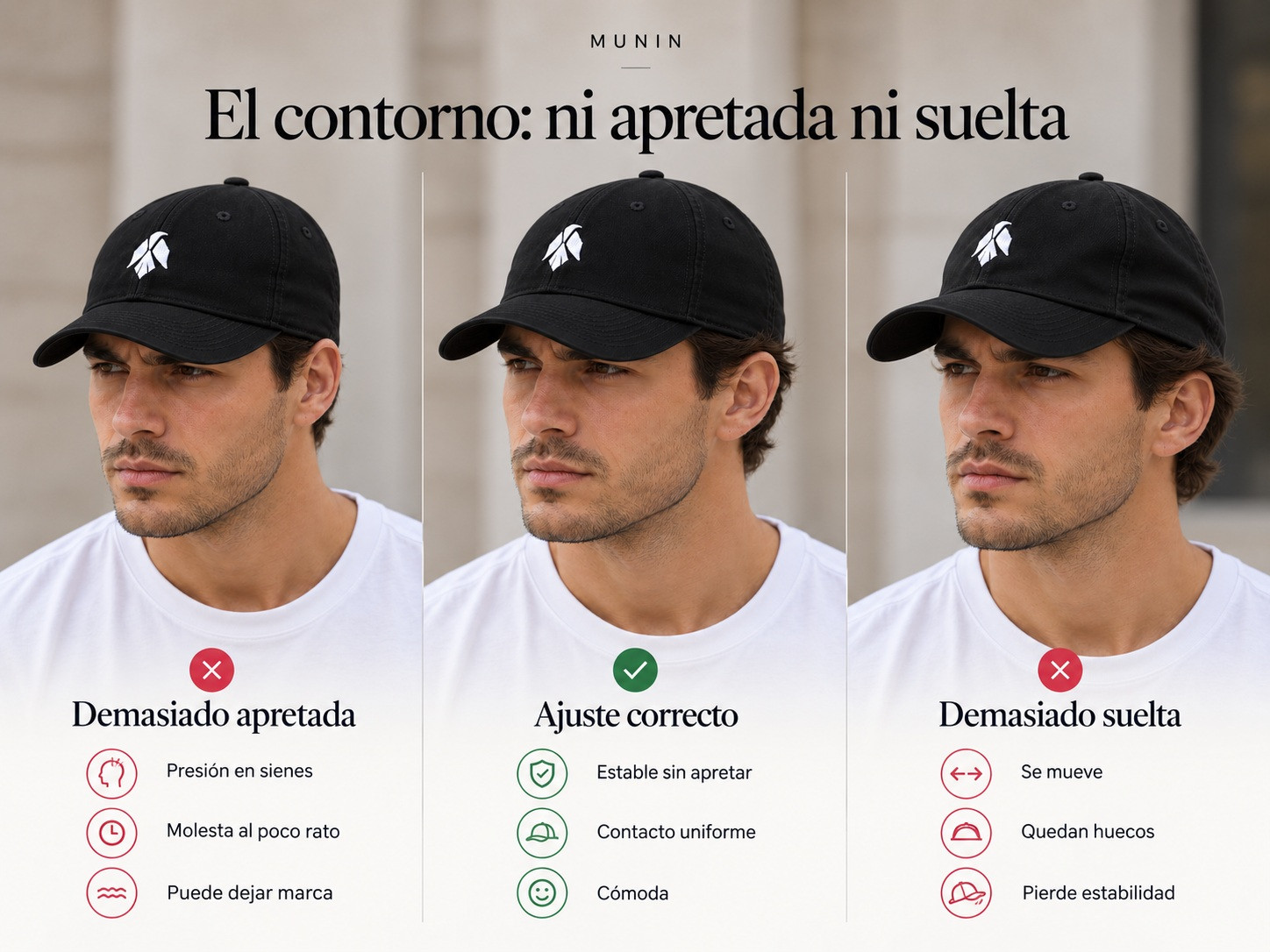
Neither too tight nor too loose
This is the simplest check. The inner band should wrap your head evenly: enough hold that the cap does not move, but without causing pressure or discomfort.
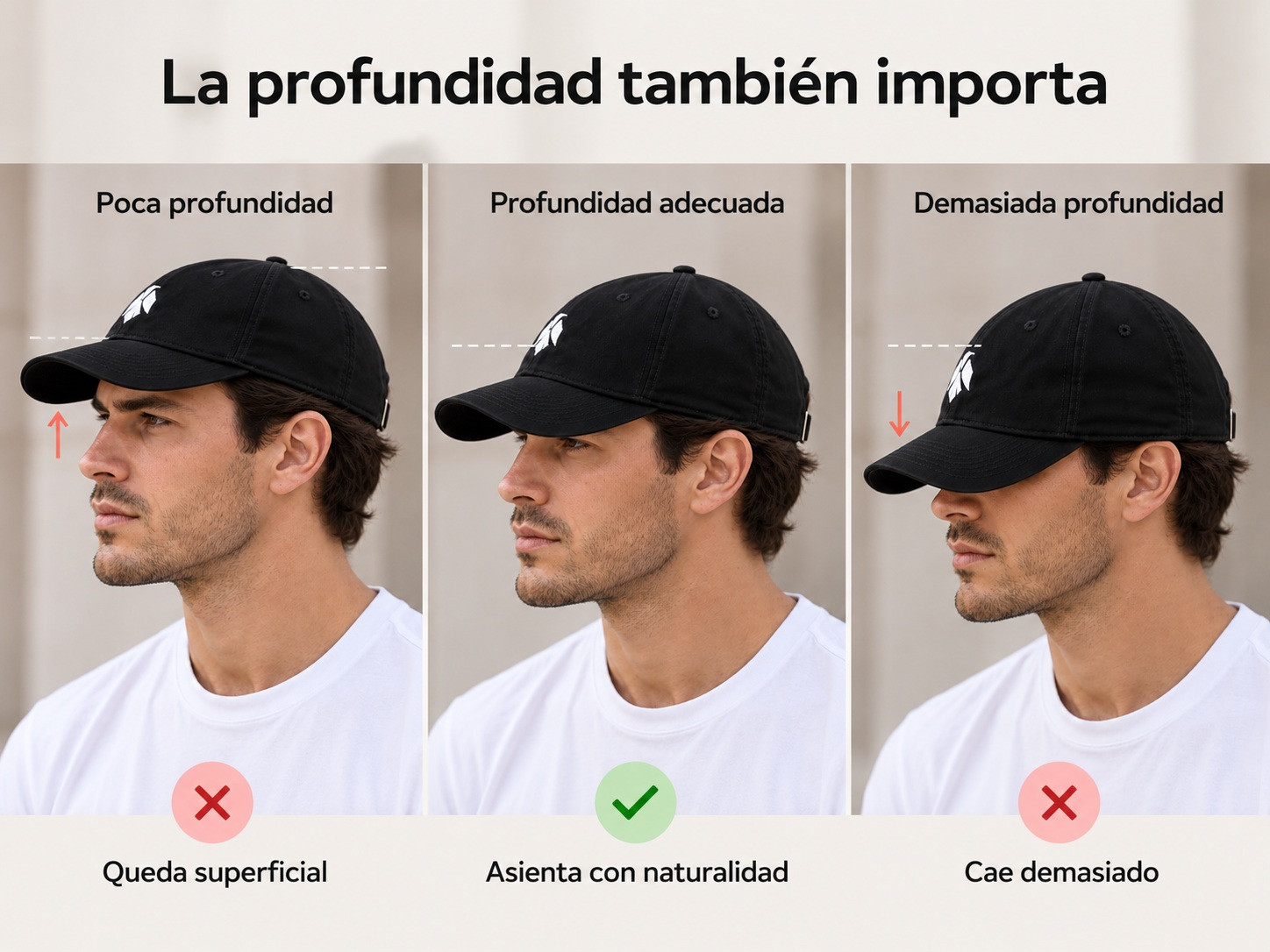
Depth also determines the fit
You can adjust the circumference correctly and still feel a cap does not sit right. In that case, the issue may be the depth or crown shape.
A shallow crown can feel merely perched on your head. One that is too deep may sit too low on your forehead or too close to your ears.
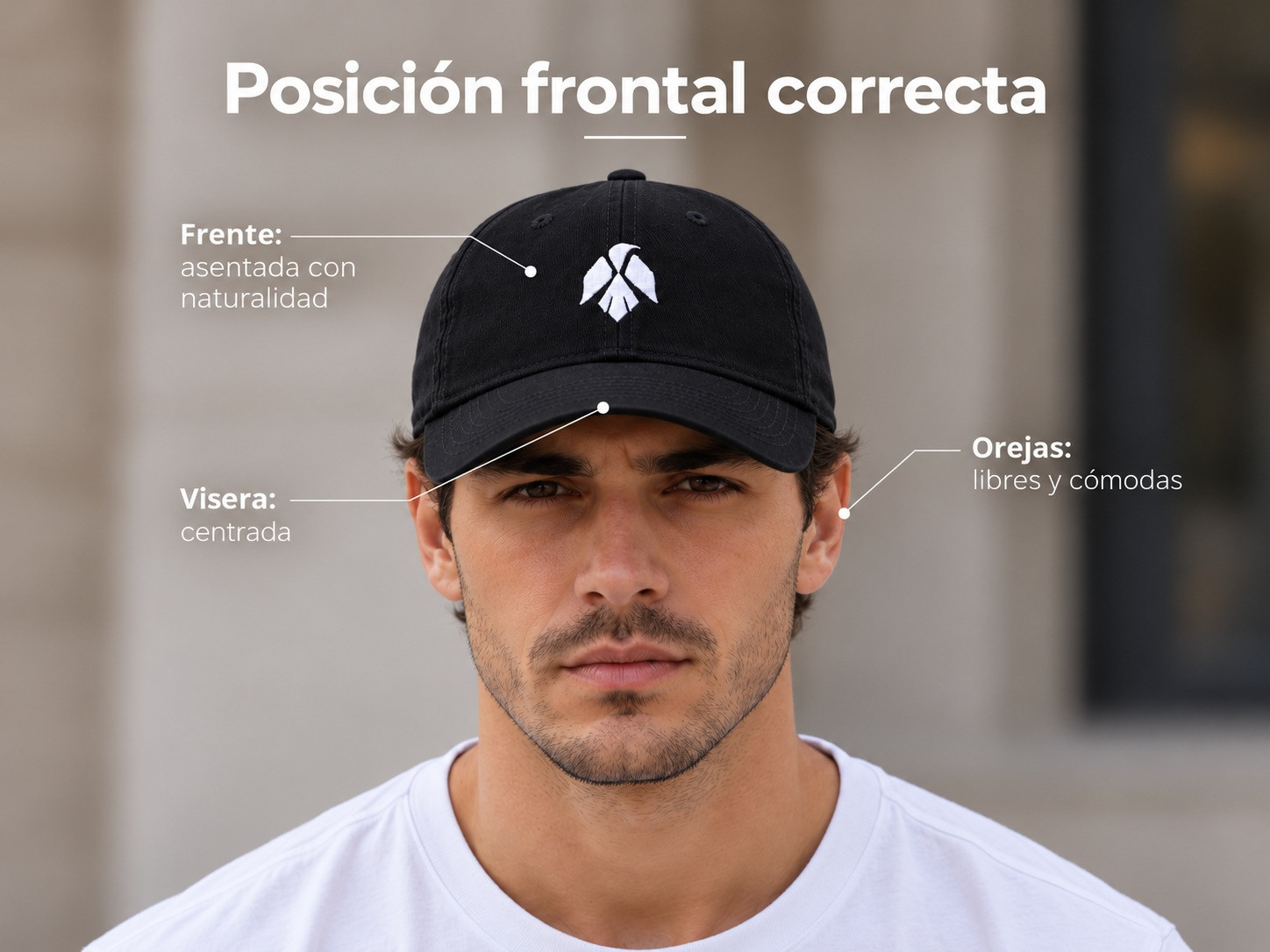
Forehead, ears, and visor: aim for a natural position
There is no universal eyebrow distance that works for everyone and every cap. Each head’s anatomy and each model’s construction change the result.
Forehead
It should sit naturally: not so high that it looks merely perched, nor so low that it covers too much forehead or interferes with vision.
Ears
The lower band may sit near them depending on the model, but it should not fold them or create uncomfortable pressure.
Visor
For a conventional placement, keep it roughly centered on your face. Its curve depends on the design and how you prefer to wear it.
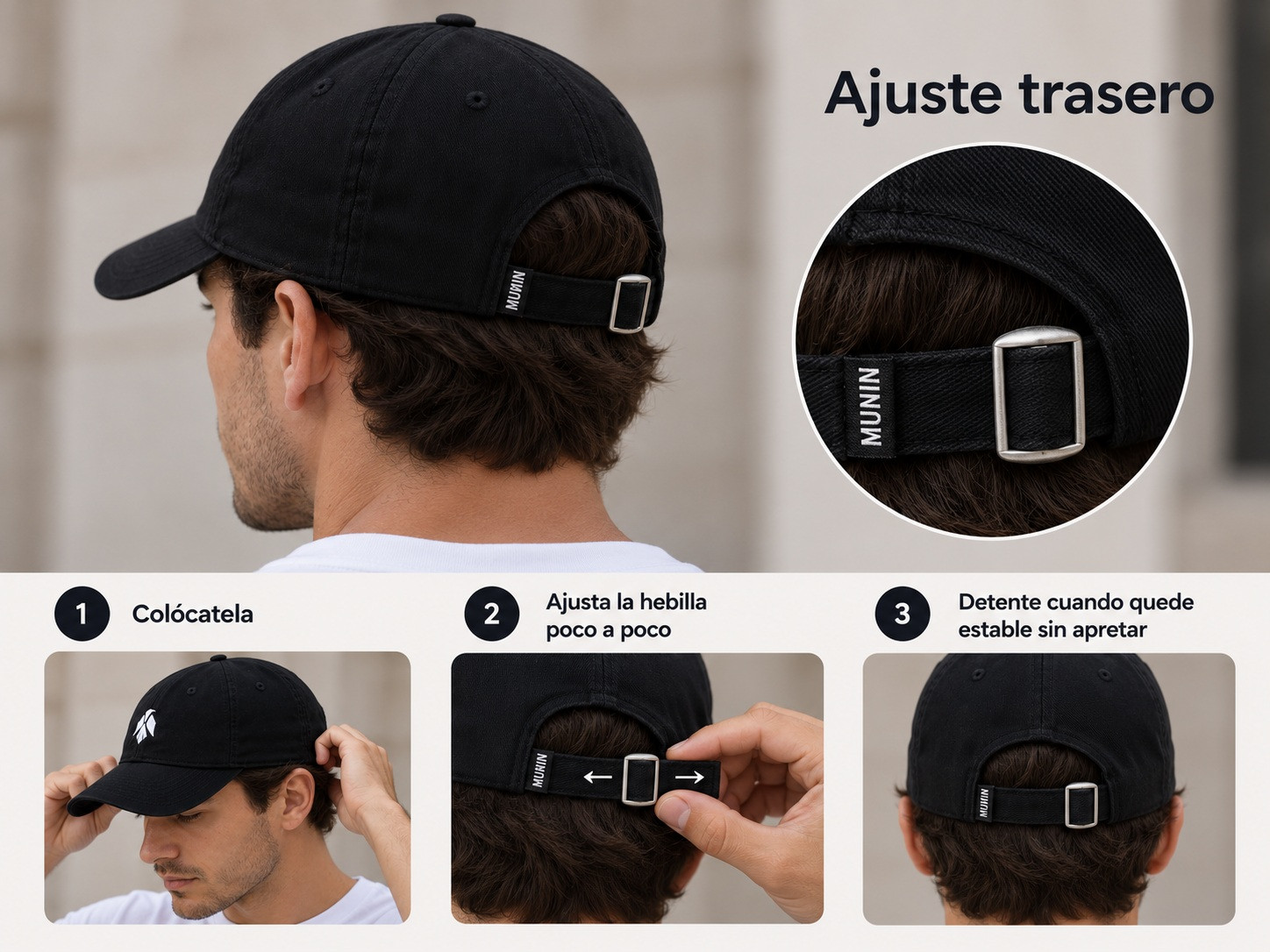
Always adjust from less to more
Put the cap on in a natural position first. Then adjust the closure gradually until it stops moving easily.
The goal is to find the minimum tension needed for stability, not to close the cap as much as possible.
Cap structure also changes how it feels
Two caps adjusted to the same circumference can look and feel different because the closure only changes the perimeter. It does not change crown shape or depth.
The 20-second test
Before calling the fit good, do a simple check. You do not need tools or measurements.
If it stays in place without squeezing or making you reposition it, you have found a good fit.
Frequently asked questions about cap fit
Does a new cap have to feel tight?
It should not need to feel uncomfortable to stay in place. If you feel obvious or increasing pressure, try opening the closure slightly and check stability again.
How do I know if a cap is too big for me?
If it turns easily, shifts when you walk, or you need to reposition it constantly, the fit is probably too loose. If tightening further does not solve it comfortably, cap shape or depth may also play a role.
Why does a cap sit high even when circumference is right?
It may be due to depth or crown structure. Tightening the closure changes circumference, not the cap’s construction.
Should the cap touch my ears?
It may sit closer or farther depending on design and your anatomy, but it should not fold them or apply uncomfortable pressure.
Can I improve the fit simply by tightening the closure more?
Not always. Circumference is only part of fit. Depth, crown shape, and cap structure also affect how it sits on your head.
A good fit completely changes how a cap feels
Spending a few seconds adjusting it properly is usually enough to find balance between stability, comfort, and how you want to wear it.
- today
- label Headwear
- favorite 0 likes
- remove_red_eye 102 views
- comment 0 comments
Comments (0)